


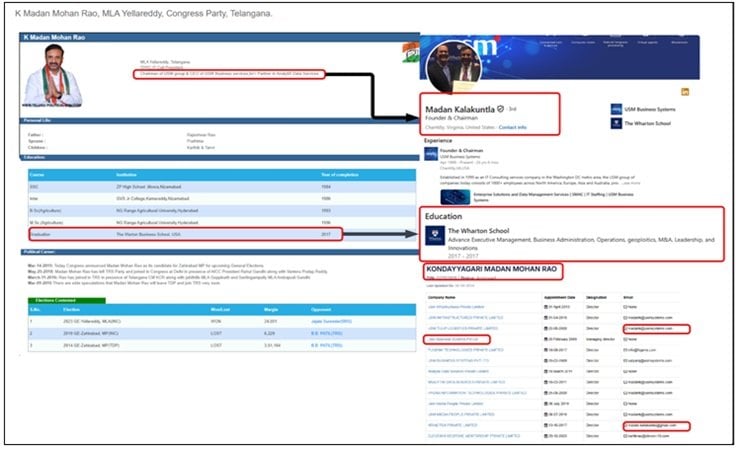
Most Americans don’t expect their tax money to flow into shell companies tied to a sitting foreign politician. Yet that’s exactly what records reveal about Madan Mohan Rao Kondayyagari – better known in U.S. business filings as Madan Kalakuntla.
On paper, he is a state legislator in Telangana, India, with deep family ties to some of the most powerful figures in the region. But behind the scenes, U.S. corporate filings and immigration records tie him to a vast network of visa-dependent staffing firms, phantom LLCs and forgiven pandemic loans.
The pattern is unmistakable: America’s weak oversight systems are turned into a personal ATM for a foreign political dynasty.
Multiple identities, same control
Public records show variations of Rao’s name appearing across corporate filings. Indian company registries list Kondayyagari Madan Mohan Rao as director of USM Infrastructures, USM Business Systems Pvt Ltd, USM Tulip Logistics and USM Resorts LLP. In the United States, filings and marketing materials surface the name Madan Kalakuntla in connection with the same group of entities.
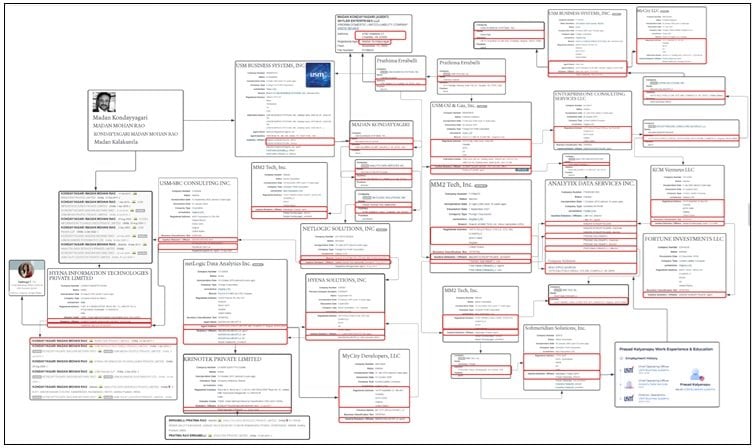
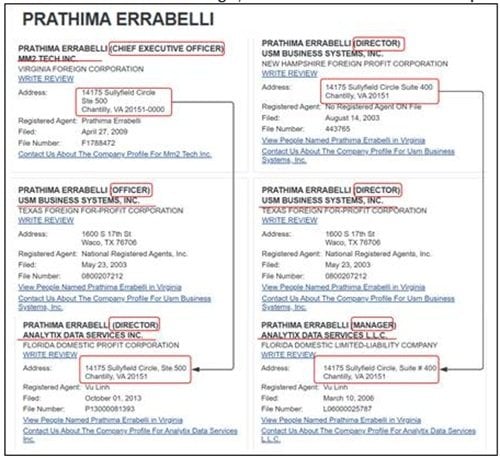
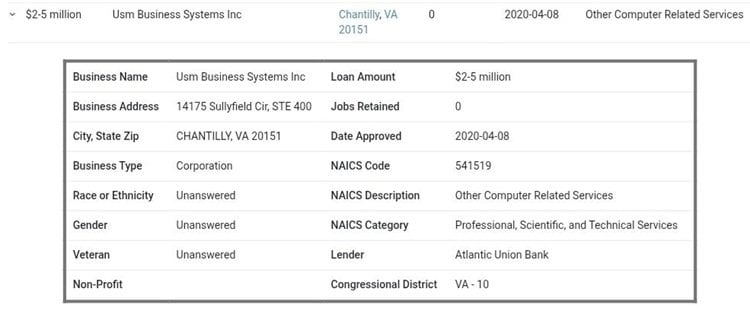
Shared addresses, especially 14175 Sullyfield Circle, Chantilly, Virginia and recurring co-directors like Errabelli Pratima Rao confirm continuity of control. The names change, but the hand behind the companies does not.
Political position, government alignment and family ties
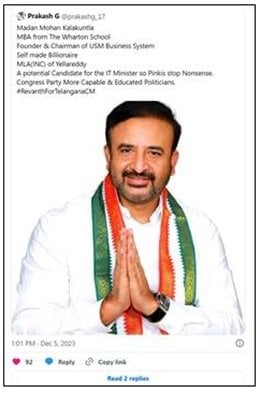
Madan Mohan Rao’s political career began in 1994 when he joined the Indian National Congress, one of India’s dominant parties.
He rose through the youth wing ranks by the late 1990s and was later named president of the Hyderabad District Congress Committee in 2004. That same year, he ran for national office in the Malkajgiri constituency, though he lost. His influence shifted in 2014 when he was appointed chairman of the Telangana State Cooperative Marketing Federation, a state-backed role that controlled farmer welfare schemes and rural economic policies.
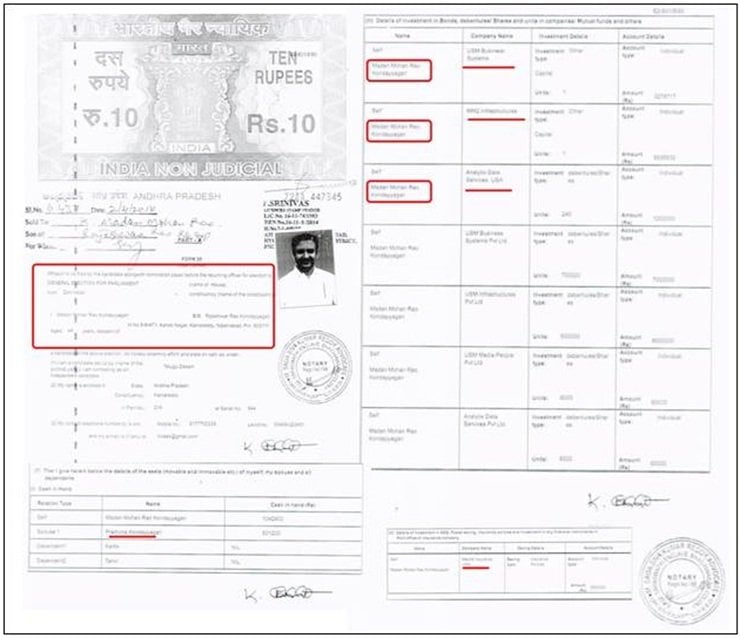
From there, he gained a position as vice president of the state party and a seat on the assembly’s finance oversight committee. By 2018, Rao had secured a legislative victory in Yellareddy, winning by more than 35,000 votes and later holding the seat again in 2023. These wins gave him the legitimacy and platform of an elected official at the same time his business network was expanding overseas.
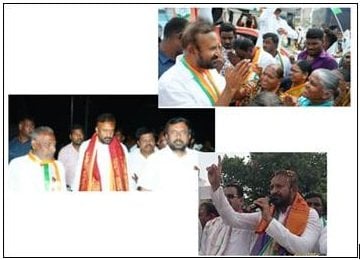
The Rao family’s political connections run deep across party lines. His father, K. Rajeshwar Rao, was a senior Congress leader and served as a minister in the cabinet of former Prime Minister P.V. Narasimha Rao. His brother, K. Ravi Kumar, is currently a minister in the ruling TRS government and his sister, K. Sujatha, is married to T. Harish Rao, a powerful TRS minister and nephew of former Chief Minister K. Chandrashekar Rao. This web of relationships provided Madan Mohan Rao with access that most private business operators could never achieve.
While positioned as an elected Congress legislator, he was still closely tied to ruling-party networks in Telangana, giving his U.S.-based shell companies and visa-driven staffing firms a political shield abroad and at home.
For American readers, the significance is clear: Taxpayer dollars flowed to entities tied to a foreign politician whose family sits at the heart of India’s ruling establishment.
How the network operates – mechanics readers can check
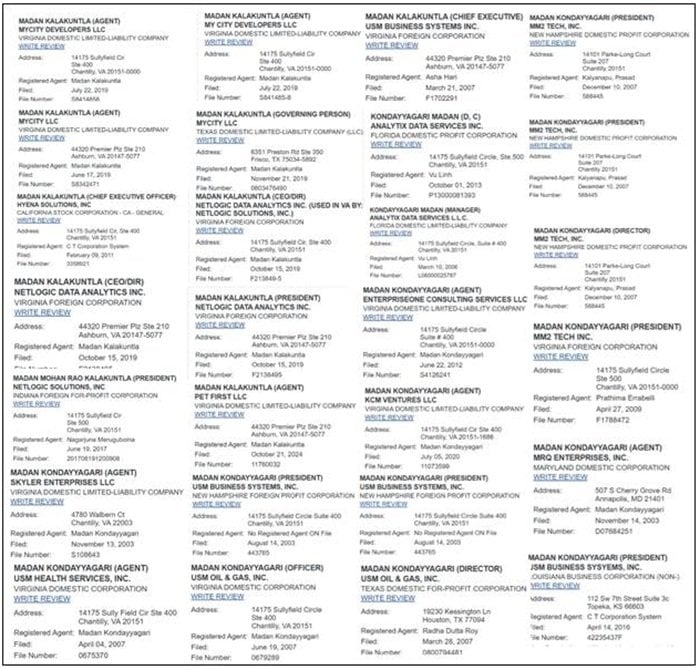
Shell companies with no real business: Paper companies with no pulse
Legitimate companies leave trails, employees, clients, financial reports. Rao’s network leaves only paperwork.
Dozens of LLCs cycled through the same small cluster of buildings in Chantilly, Virginia. When one entity dissolved, another appeared in its place, often with the same agents and officers recycled on the filings.
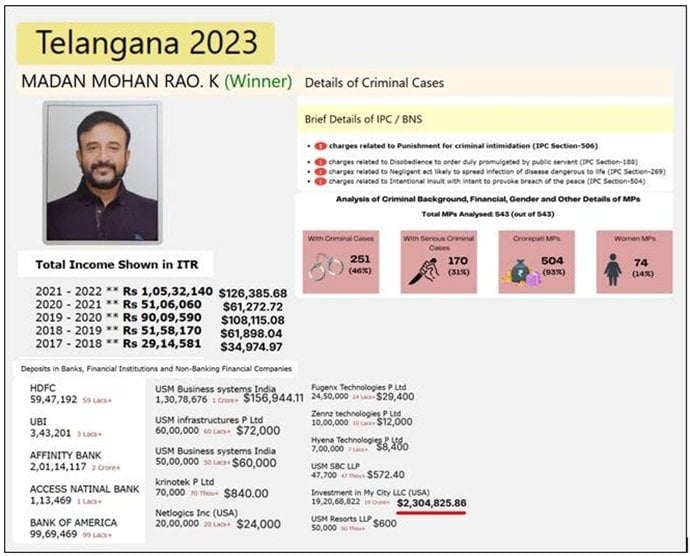
What stands out is not what these firms did, but what they didn’t. Many had no functional websites, no public clients and no visible operations in the U.S. Yet Rao’s own financial disclosures in India report millions tied to these very shells.
The most glaring example: Investment in My City LLC, valued at $2.3 million on paper, but showing no evidence of business activity. Like his other entities, it relied on the same Virginia addresses and recycled officers.
Between 2017 and 2022, Rao’s declared income jumped from $34,974 to more than $126,385 per year, alongside deposits and stakes in Indian and U.S.-registered companies.
The contradiction is obvious: How can firms that leave no footprint in the American economy still serve as the backbone of a foreign politician’s wealth? The answer points to a revolving-door system of shells, vehicles for moving funds, securing visas and tapping relief programs, without the accountability or transparency of real businesses.
Turning loopholes into profit: The visa pipeline
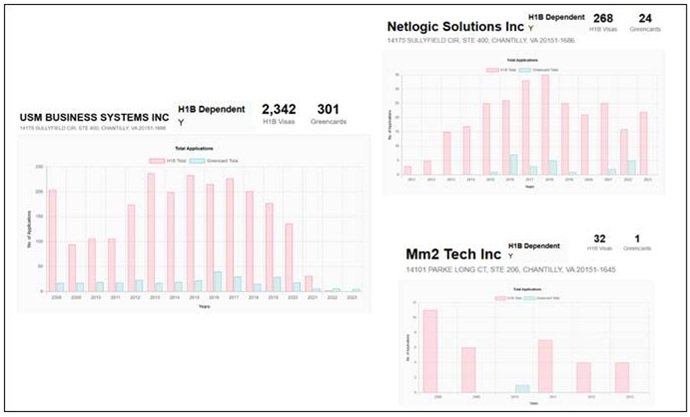
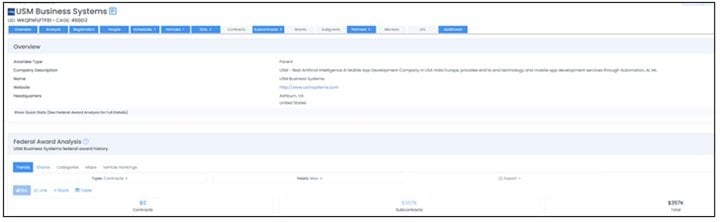
The records show that Rao’s U.S. entities were not built to serve end clients in the traditional sense. Their main product was visa-dependent workers from India. Data from federal filings confirms that USM Business Systems alone filed more than 2,300 H-1B petitions and 300 green card applications over the past decade. Nearly all were funneled through the same Chantilly, Virginia address. The sheer volume places the company in the category of “H-1B dependent,” a designation given when the majority of a firm’s workforce relies on temporary visas.
Benching and hotlist recruiting
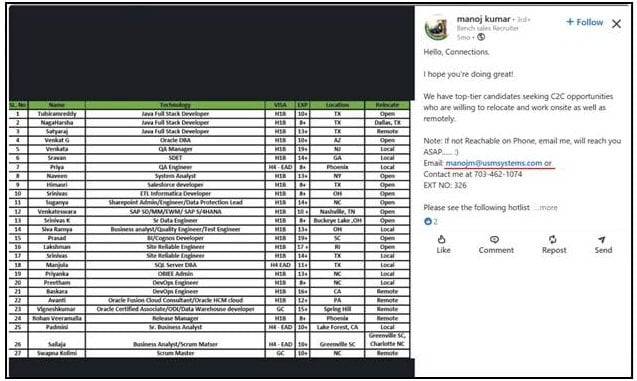
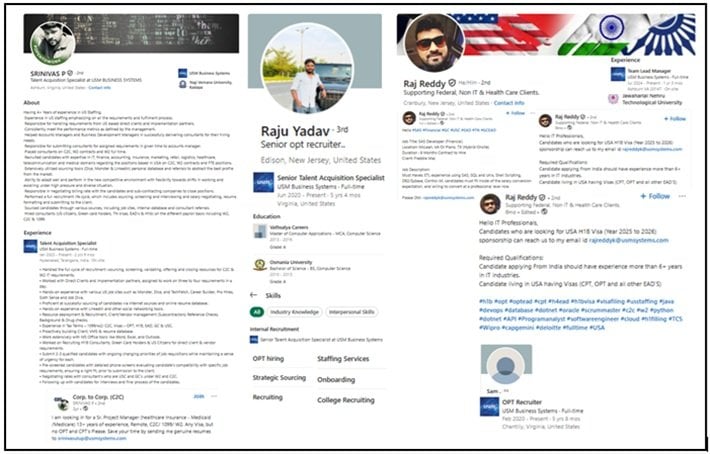
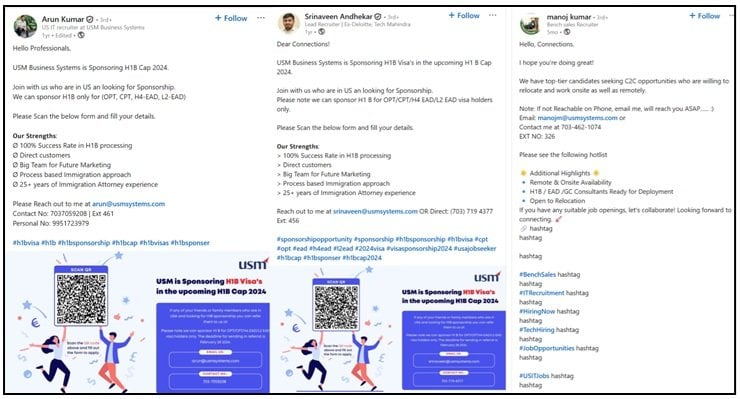
Screenshots from LinkedIn and internal recruiter lists reveal a steady practice of “hotlisting” foreign workers waiting on the bench. Candidate spreadsheets list dozens of names, almost all holding H-1B, H-4 EAD or OPT visas, advertised for rapid deployment to projects across multiple states. Recruiters promoted these workers on social platforms as “ready to relocate,” a tactic suggesting workers were sourced first by visa status, not by skills or availability. This practice directly conflicts with U.S. law, which requires visa workers to be paid even while unassigned and prohibits excluding qualified American applicants.
Employee testimony and reviews
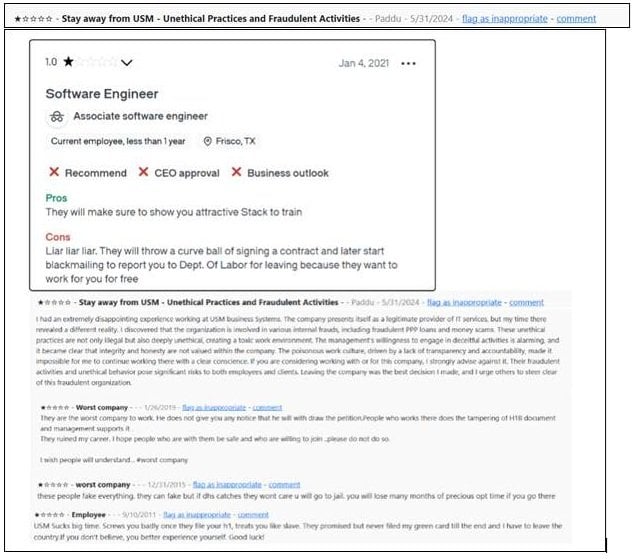
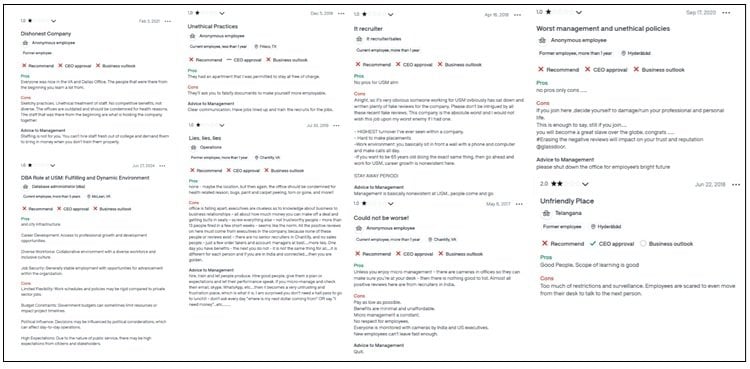
Reviews from self-identified employees and contractors describe a consistent pattern: contracts signed under false pretenses, threats of retaliation for leaving jobs and instances of nonpayment. One former software engineer reported being pressured to work without pay while under threat of being reported to the Department of Labor. Others alleged fraudulent practices, blackmail and tampering with immigration paperwork. These accounts align with known indicators of labor trafficking, including wage withholding, coercion through immigration status and misrepresentation of employment conditions.
Visa-dependent recruiting patterns
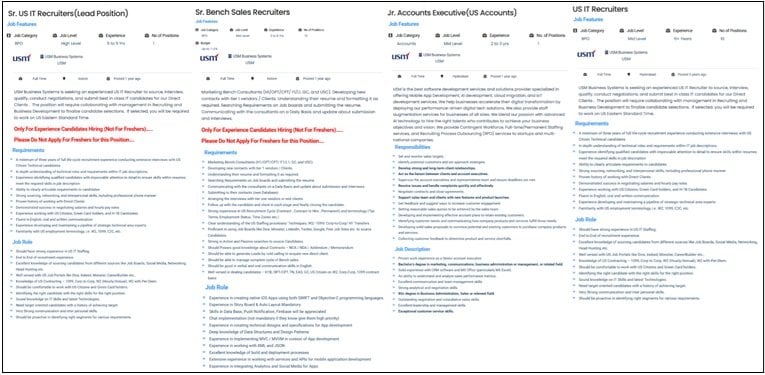
Recruiters tied to Rao’s companies, including profiles for bench sales recruiters and OPT recruiters, openly advertised sponsorship opportunities. Posts list H-1B and green card sponsorship as benefits and in some cases explicitly invite candidates “looking for visas” rather than advertising open roles for the general labor market. Other posts highlight “100% success rates” in visa processing, “direct tie-ups with clients” and “best immigration approach.” This turns visa sponsorship itself into a commodity, a business model in which the visa is the product, rather than a means to fill genuine skill shortages.
Corporate access through Hyderabad’s tech hub
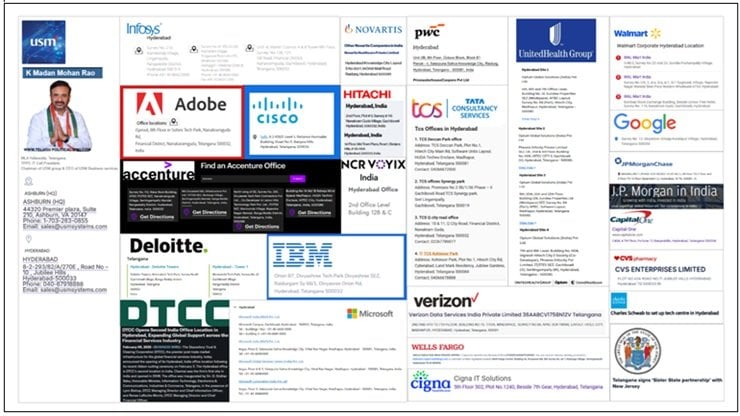
Rao’s entities placed workers at Fortune 100 companies: Google, Microsoft, Walmart, Cisco, JPMorgan, Wells Fargo, Capital One and UnitedHealth. At first glance, this looks like staffing success. But with no patents, no products and little stability, these firms resemble labor brokers exploiting U.S. oversight gaps.
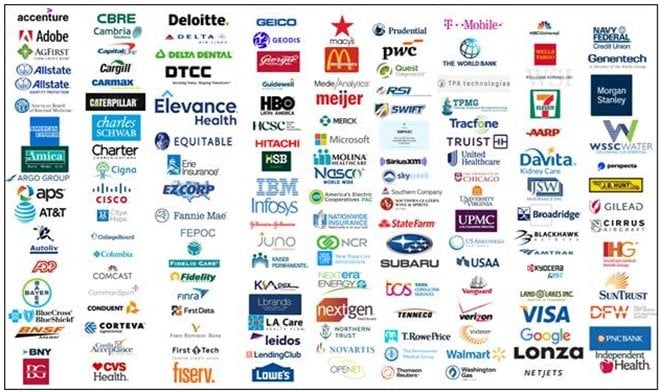
The overlap raises questions: Rao’s political base in Telangana houses billion-dollar U.S. corporate campuses. He simultaneously controls U.S. staffing firms feeding workers into those same companies. No direct contracts link the two, but the proximity of political power and corporate pipelines is hard to ignore.
A foreign government gains U.S. government contracts
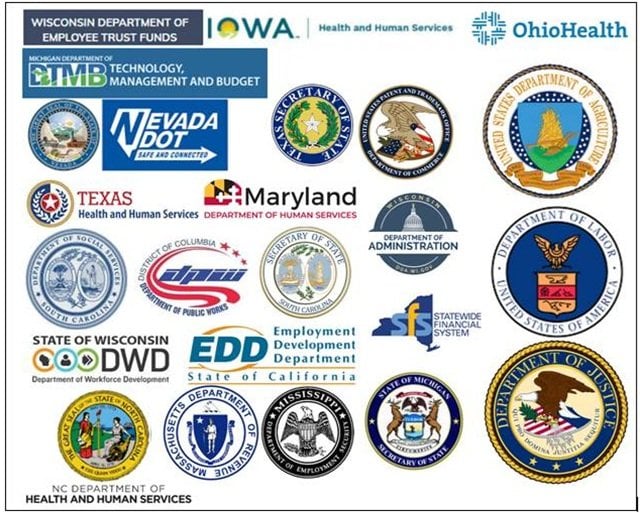
The same network reached into American government systems. Award data shows Rao-linked firms securing contracts with the Department of Justice, the U.S. Patent and Trademark Office and multiple state labor and health agencies. These weren’t long-standing defense contractors with technology portfolios. They were revolving LLCs tied to the same Virginia addresses already flagged for visa dependency. Still, they were cleared to handle taxpayer-funded projects, including sensitive data. The same Department of Labor that rubber-stamped their visa filings also cleared their contracting paperwork. Oversight failed twice.
Pandemic relief turned into a pipeline
The final piece of the puzzle comes from the COVID-era Paycheck Protection Program. Designed to keep American businesses afloat and protect workers’ paychecks, PPP loans required companies to certify that funds would be used for payroll and job retention.
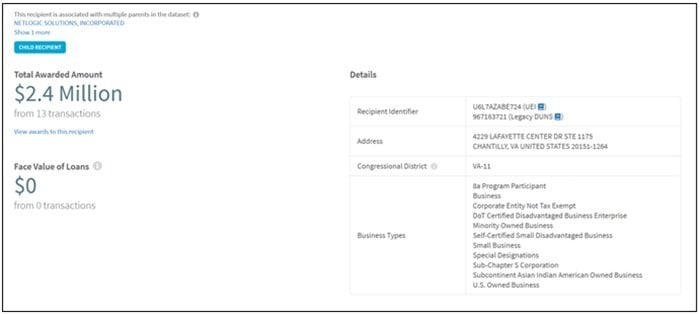
Yet companies tied to Madan Mohan Rao’s network, including USM Business Systems and NetLogic Solutions, received loans totaling millions of dollars. Public records show that every loan was ultimately forgiven. On paper, this meant taxpayers absorbed the cost while the companies walked away debt-free.
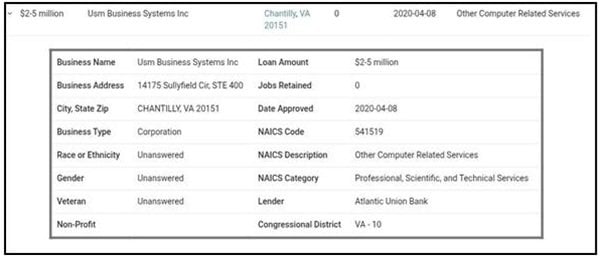
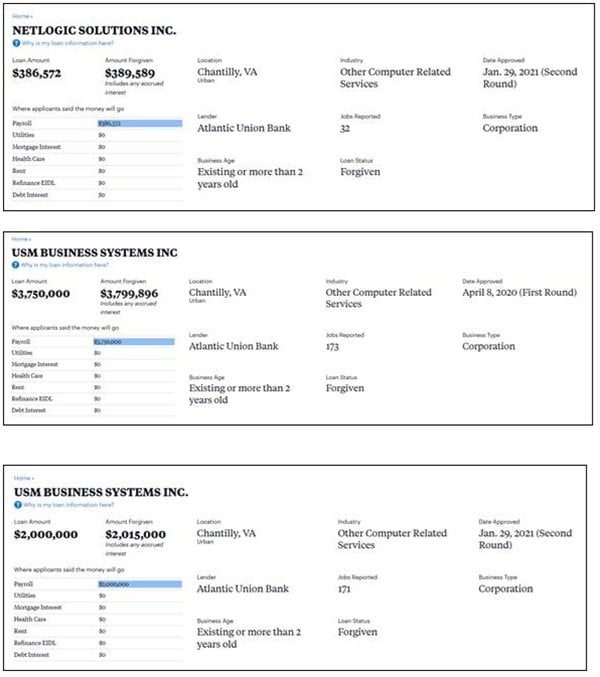
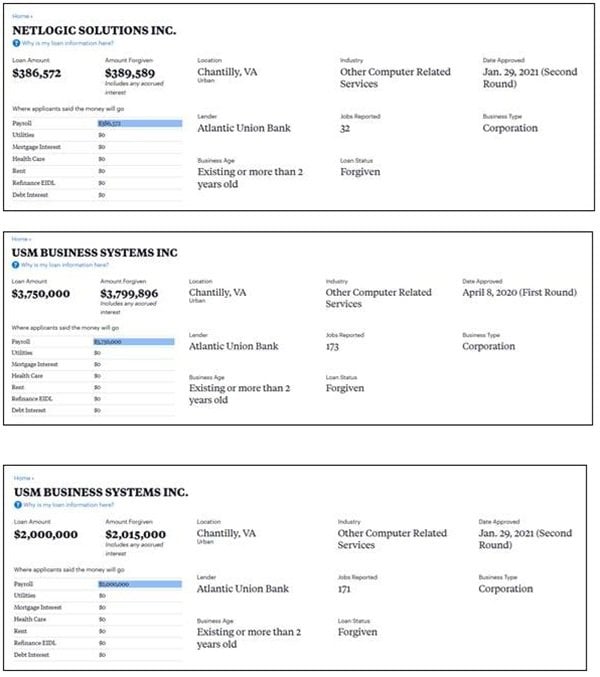
The contradictions are clear. Employee complaints point to unpaid wages and benching practices during the same period that these companies certified their payroll obligations were met. Visa records show continued reliance on foreign hires even as small American-owned businesses closed their doors. And Madan’s own Indian financial disclosures list millions of dollars in assets tied to these U.S. entities, assets that grew while American taxpayers picked up the bill.
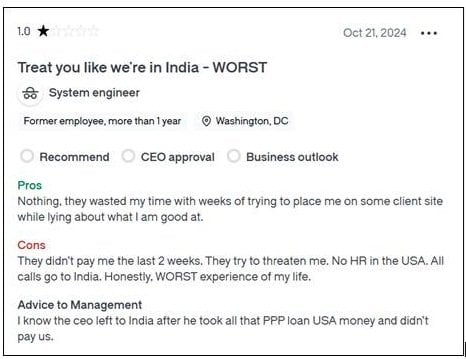
The evidence points to a structural weakness: Loans were issued and forgiven based on self-certifications, with little or no verification of actual payroll practices. For most businesses, this was a lifeline. For Rao’s shell companies, it became another channel of enrichment, sustained not by innovation or public service, but by exploiting gaps in oversight.
The PPP trail closes the loop. Shell companies with no products or patents secured corporate placements, leveraged political influence, won access to state and federal contracts and finally drew on taxpayer-funded pandemic relief, all while operating as part of a network directed by a foreign politician.
The bottom line for Americans
This scandal is not about one politician or obscure filings. It is about how America’s broken immigration system allows a foreign government to profit at the direct expense of its people. By exploiting loopholes and relying on weak oversight, Madan Mohan Rao and his network of shell companies secured jobs that should have gone to Americans, won contracts that granted access to sensitive U.S. government data and collected millions in forgiven pandemic loans funded by taxpayers.
The implications are stark. A sitting foreign legislator and his family turned U.S. immigration into a business model. They enriched themselves through a labor pipeline that displaced American workers, all while being trusted with projects inside the very government agencies meant to safeguard the nation.
The danger is not only economic but national security. A foreign politician’s network operated inside America’s systems with little oversight and the people responsible for regulating these programs failed to catch it. It was not the Department of Labor or federal watchdogs who uncovered the operation, but an independent investigator piecing together records the government ignored.
The final insult is that Americans themselves paid for it. Their tax dollars funded the contracts, covered the forgiven loans and sustained the very visa system that excluded them from jobs. The result is clear: A broken immigration system is enabling foreign enrichment, displacing American workers and compromising national security, all at the expense of the citizens it was supposed to protect.
* * *
Content created by the WND News Center is available for re-publication without charge to any eligible news publisher that can provide a large audience. For licensing opportunities of our original content, please contact [email protected].
This article was originally published by the WND News Center.